







Decoding Traffic Sign Colors
Decoding Traffic Sign Colors
rnrn
rnrn
For new drivers, learning the ways of the road can be daunting. To help new drivers navigate, we’re offering these helpful tips to understand what different color road signs mean.
rnrn
rnrn
RED: When you see a red sign, it means stop, do not enter, wrong way.
rnrn
rnrn
Orange: Orange signs mean you’re in (or entering a construction zone). Orange signs will also provide drivers cautionary information about the construction zone (such as detour routes, temporary speed limits, etc.).
rnrn
rnrn
Yellow: Like a yellow light on a traffic light, yellow means caution. Yellow signs indicate unexpected roadway conditions such as a sharp curve ahead.
rnrn
rnrn
Fluorescent Yellow/Green: These are extreme caution signs to alert drivers to be cautious of an upcoming school zone, pedestrian traffic, or bicycling activity.
rnrn
rnrn
White: White signs are regulatory, and display information such as speed limits.
rnrn
rnrn
Green: Green signs indicate directional information such as highway exit information.
rnrn
rnrn
Blue: Motorist service guidance, such as indication of a handicapped parking space.
rnrn
rnrn
Brown: These signs indicate areas of public recreation such as state park entrances, cultural and historical significance.
rn
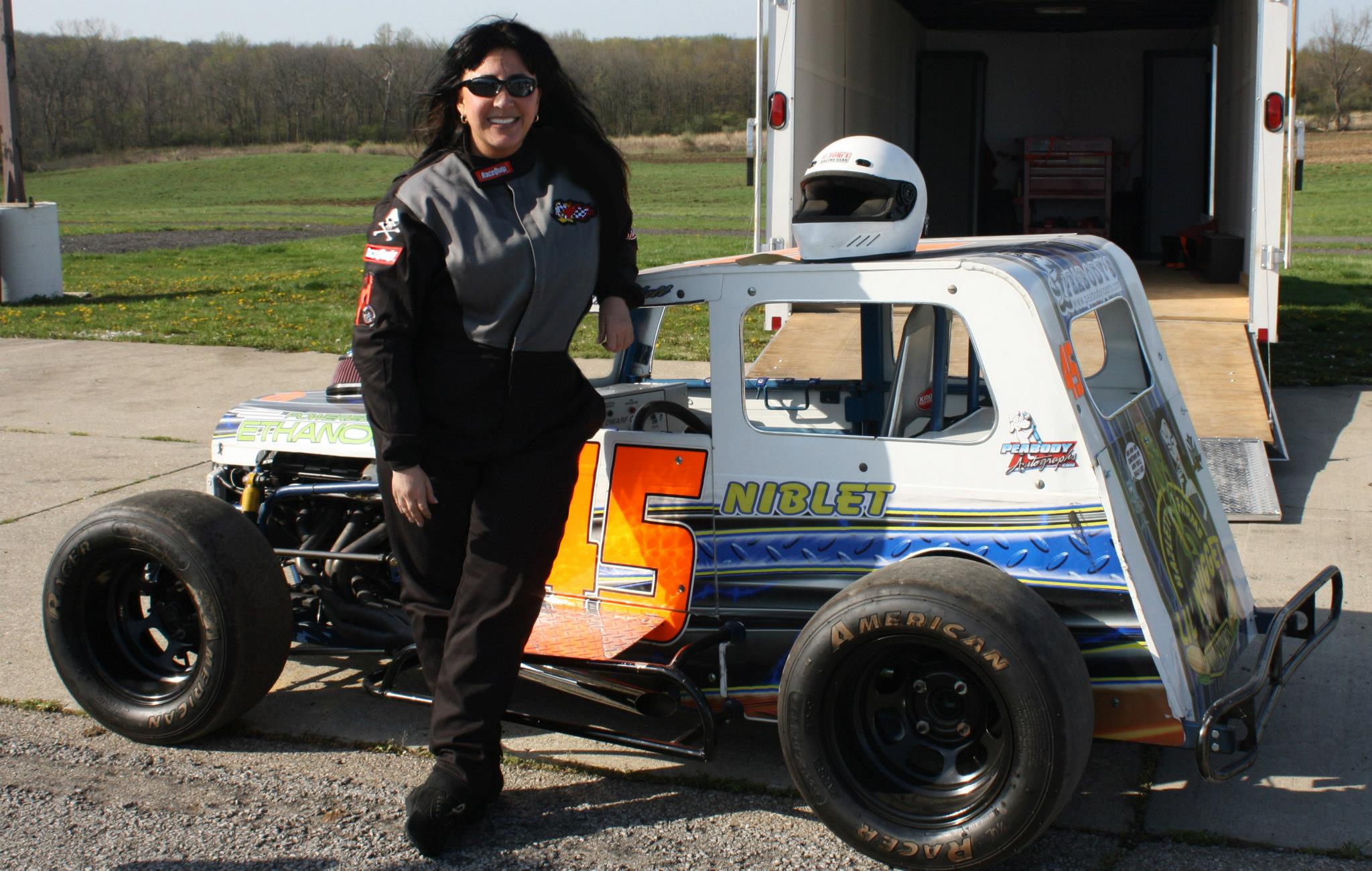
My name is Lynn and I’m the Director of Marketing for the SVG Motors Auto Group. I was also a circle-track racecar driver from 2003-2015.
rn
rnBy choice, my father’s entire life revolves around vehicles because they are his passion. His profession was as an educator – he taught auto collision for 35 years at the local vocational school and gave hundreds of young men and women the knowledge to make a good living in the auto industry. His hobby is circle-track racing; it’s a hobby he loves to this day and has participated in since 1968. It’s no secret to those that know me that I inherited his love of vehicles, and although I didn’t follow in his professional footsteps, I most certainly followed in his footsteps when it came to his hobby of choice. rn
rnrn
rn
rn
rn
rn
rn
rn
rn
rn
rn
rn
rnThis was one of the 5 racecars I’ve driven.
rnrn
rnHaving grown up spending every weekend of every year from April through October watching my dad race at local tracks such as Kil-Kare and Shadybowl (among many others), I saw my fair share of on-track wrecks. Guessing how many wrecks I’ve witnessed would be difficult, but it’s fair to say I’ve attended at least 3,000 racing events. While some events are crash-filled, some go fairly smoothly. On average, I’d say there are about three wrecks per racing event. Following the math, that equals me personally witnessing around 9,000 wrecks. You learn a thing or two after seeing that much destruction.rnrn
rnThe benefit of seeing so many wrecks is that I had the opportunity to observe how the cars would react when hitting another car or the wall. Time seems to slow down exponentially during a wreck. I have vivid recollections of watching how driver’s bodies would move and react upon impact. By talking with these same drivers after their wrecks, I was also able to learn how and if they were injured during the wreck. A lifetime of cataloguing this information into my brain enabled me to formulate some tactics to help prevent or lessen the potential for injury during an accident.rnrn
rnWhen I began racing, I diligently used these self-preservation tactics on the track (because the truth is, no matter how good you are at racing, wrecks will happen). As a mom, it was my responsibility to ensure I took every precaution available to help protect my safety for my kid's sake. Although I’ve been blessed enough to not have experienced a wreck on the road in nearly 25 years, I experienced a few during my racing career. My racing incidents would usually leave me with a few small bruises or bumps, but I was never seriously injured. I attribute that fact to following the tips I'm about to give you. These tips can be used by every driver, no matter what kind of vehicle you drive. Auto accidents in the U.S. are responsible for 75% of all traumatic brain injuries and 93 fatalities occurring per day. Knowing these techniques can hopefully help you and your loved ones from becoming one of those statistics.rnrn
rnrn
· Tip #1: I don’t care if it’s uncomfortable. WEAR YOUR SEATBELTS. Had I not been using the proper safety equipment in my racecar, I’d be dead now. Also, wear it properly. For those of you who are short like me, it’s really tempting to put the chest strap behind your back since it feels like it’s digging into your neck or choking you. Truth be told, it IS digging into your neck, but the alternative is much, much worse. I’d much rather have a bruise on my neck from a seatbelt than to smash my face into a dashboard at a high rate of speed. To illustrate this concept, watch the video below. The only injury I had after the impact was a burn mark on my neck from the belt (note: I’m the one driving the white car with pink and purple graphics). I was spared from some serious injury because I was using the proper restraints.
rn
rnThe head-on wreck:
rn
rnThe resulting injury:
rnrn

rnrn
rnrn
· Tip #2: Face forward, and sit with your back and head against the seat. The point is to distribute your body weight as evenly as you can in your seat. Facing forward also helps the airbag (if deployed) to protect the vital areas of your body it’s designed to protect.
rnrn
rnrn
· Tip #3: If you know the impact is coming and is 100% unavoidable, let go of the steering wheel and cross your arms over your chest. Often, people tense up and hold onto the steering wheel when they see an impact coming and this can fracture wrists, arms, and shoulders. Pulling your arms to your body and crossing them against your chest helps keep your hands from lurching forward and striking things during the impact.
rnrn
rnThis random modeling photo from Pexels.com actually shows the correct placement of your hands when you know you're about to have an impact:
rn
rnrn
rnrn
· Tip #4: Your driving instructor was correct…you should have your hands at 10 and 2 on the steering wheel. Using both hands to steer can give you enough control that in certain circumstances, you can potentially avoid an impact using precise maneuvering. But if you can't steer out of a spin and you know the impact is coming, let go of the wheel and use Tip #3!
rnrn
rnrn
· Tip #5: Try not to tense up if you know for sure that you’re going to hit something (although it’s easier said than done). The sudden impact will transfer energy to your tensed up, rigid muscles which can cause limbs to bend in ways they shouldn’t.
rnrn
rnrn
· Tip #6: Don’t sit too close to the steering wheel. You should be able to fully press down on both the accelerator and brake from your seat without stretching, but….it’s equally important to move your seat back as far as you can while still being able to press the pedals down fully. Sitting too close to the airbag can actually cause injuries instead of preventing them.
rnrn
rnrn
I hope you appreciate these tips I've provided. Steve VanGorder and everyone in the SVG Motors Auto Group cares about you and your safety. It's our goal to give you a Superior Value Guarantee and also to provide you with tips, tricks, advice, and articles to help make owning your vehicle more safe, fun, and enjoyable. If you're in the market for a new car, you owe it to yourself to shop with a company that will treat you like family and give you the best value — and that company is SVG.
rnrn
rnrn
rnrn
rnrn
rnrn
rnrn
rn
Look to these vehicles for affordable insurance
When you're shopping for a pre-owned vehicle, it's pretty likely that you have a budget in mind. For example, after crunching the numbers, you might find that you have $350 a month available for a new vehicle. That's great! But don't forget to factor in insurance costs for that vehicle.
rn
rnEvery vehicle owner is required by law to have a minimum amount of liability insurance on their vehicles (or the means to provide a financial responsibility form). If you obtain a loan for your new vehicle, your lending institution will require you to have not only liability coverage, but also collision and comprehensive coverage, too (or what insurance companies call "full coverage"). With this in mind, your next question might be, "How do I know how much insurance will be on the vehicle I want?" You could fill out online quote request forms from the major insurance providers, but if you're uncomfortable sharing your info online, that might not be a great option for you.
rn
rnAnother option is to take a look at the data that Insure.com pulled together for consumers. They obtained quotes from 6 of the leading American insurers on hundreds of different vehicles. They compiled the data and then ranked the results to find out which vehicles were the most affordable to insure, and we're sharing them with you. Taking a look at this list may help you decide which type of vehicle you ultimately want to buy. Keep in mind that the type of vehicle you choose isn't the only factor that will affect your insurance rate. Insurance companies also factor in the driver's age, the number of miles they drive per week, their driving record, and their credit history along with several other factors. However, as a general rule, the following vehicles are the most affordable to insure (and of course, we have them in our inventory here at SVG Motors!):
rn
rn1. Honda Odyssey LX rn
 rn  |
2016 Honda Odyssey EX-L | Price: $25,850.00 | |
| Bodystyle: Van Passenger Van | Int. Color: Beige | ||
| Engine: V-6 cyl | Odometer: 32447 | ||
| Transmission: 6-Speed Automatic | Stock #: 3980V | ||
| Ext. Color: Obsidian Blue Pearl | Vin: 5FNRL5H65GB096241 | ||
| CLICK FOR DETAILS | |||
rn
rn
rn2. Jeep Renegadernrn
 rn |
2017 Jeep Renegade Latitude 4×4 | Price: $15,700.00 | |
| Bodystyle: SUV | Int. Color: black | ||
| Engine: I-4 cyl | Odometer: 52417 | ||
| Transmission: 9-Speed 948TE Automatic | Stock #: 4039V | ||
| Ext. Color: Hypergreen Clearcoat | Vin: ZACCJBBBXHPF22466 | ||
| CLICK FOR DETAILS | |||
rn
rn
rn3. Jeep Wrangler rnrn
 rn |
2016 Jeep Wrangler JK Unlimited Sport 4X4 | Price: $29,200.00 | |
| Bodystyle: SUV | Int. Color: black | ||
| Engine: V-6 cyl | Odometer: 16336 | ||
| Transmission: 5-Speed Automatic | Stock #: 4042V | ||
| Ext. Color: Black Clearcoat | Vin: 1C4BJWDG4GL109585 | ||
| CLICK FOR DETAILS | |||
rn
rn
rn4. Honda CR-V LX rnrn
 rn |
2013 Honda CR-V EX-L AWD | Price: $16,500.00 | |
| Bodystyle: SUV | Int. Color: Black | ||
| Engine: I-4 cyl | Odometer: 52233 | ||
| Transmission: 5-Speed Automatic | Stock #: 3989V | ||
| Ext. Color: Kona Coffee | Vin: 2HKRM4H74DH675251 | ||
| CLICK FOR DETAILS | |||
rn
rn
rn5. Jeep Compass rnrn
 rn |
2016 Jeep Compass Latitude 4×4 | Price: $15,400.00 | |
| Bodystyle: SUV | Int. Color: dark slate gray | ||
| Engine: I-4 cyl | Odometer: 41034 | ||
| Transmission: 6-Speed Automatic | Stock #: 3910V | ||
| Ext. Color: Granite Crystal | Vin: 1C4NJDEB1GD725176 | ||
| CLICK FOR DETAILS | |||
rn
rn
rn6. Subaru Outback 2.5irnrn
 rn |
2016 Subaru Outback 2.5i Limited | Price: $22,800.00 | |
| Bodystyle: SUV | Int. Color: warm ivory | ||
| Engine: H-4 cyl | Odometer: 32583 | ||
| Transmission: CVT Lineartronic | Stock #: 4005V | ||
| Ext. Color: Tungsten | Vin: 4S4BSBNC3G3340829 | ||
| CLICK FOR DETAILS | |||
rn
rn
rn7. Jeep Cherokee Sport rnrn
 rn |
2014 Jeep Cherokee Sport FWD | Price: $11,200.00 | |
| Bodystyle: SUV | Int. Color: black | ||
| Engine: I-4 cyl | Odometer: 80768 | ||
| Transmission: 9-Speed 948TE Automatic | Stock #: UU696 | ||
| Ext. Color: Bright White Clearcoat | Vin: 1C4PJLABXEW143586 | ||
| CLICK FOR DETAILS | |||
rn
rn
rn8. Buick Encore rnrn
 rn |
2016 Buick Encore Convenience | Price: $15,600.00 | |
| Bodystyle: SUV | Int. Color: ebony | ||
| Engine: I-4 cyl | Odometer: 13776 | ||
| Transmission: 6-Speed Automatic Electronic with Overdrive | Stock #: 3734V | ||
| Ext. Color: Quicksilver Metallic | Vin: KL4CJBSB1GB548988 | ||
| CLICK FOR DETAILS | |||
rn
rn
rn9. Jeep Patriot Sport rnrn
 rn |
2016 Jeep Patriot Latitude | Price: $15,400.00 | |
| Bodystyle: SUV | Int. Color: dark slate gray | ||
| Engine: I-4 cyl | Odometer: 54177 | ||
| Transmission: 6-Speed Automatic | Stock #: 4035V | ||
| Ext. Color: Billet Silver Metallic Clearcoat | Vin: 1C4NJRFB7GD654206 | ||
| CLICK FOR DETAILS | |||
rn
rn
rn10. Subaru Forester 2.5i rnrn
 rn |
2016 Subaru Forester 2.5i | Price: $18,200.00 | |
| Bodystyle: SUV | Int. Color: black | ||
| Engine: H-4 cyl | Odometer: 40113 | ||
| Transmission: Lineartronic CVT | Stock #: 3999V | ||
| Ext. Color: Ice Silver Metallic | Vin: JF2SJABC1GH503309 | ||
| CLICK FOR DETAILS | |||
rn
rn
rn
rnCurious what the most expensive vehicle is to insure? Well, it's probably a Lamborghini or some other exotic hyper car. Insure.com didn't include exotic vehicles in their research. They did include higher-end luxury vehicles such as Mercedes and BMWs though. The "winner" of the most expensive car to insure was the Mercedes-AMG S65 convertible, which costs a whopping $319 a month in insurance on average! Whoa!
rn
rnFor the budget-minded consumer who wants the best value for their money, their first stop should always be SVG Motors in Dayton. Not only will you get great, valuable benefits such as 3 years of free oil changes and one year of free paintless dent repair, you'll also get 7 days to love it or return it! For full details of all the wonderful benefits you get by shopping with SVG, click here. If you see a vehicle on this list that you're interested in, we encourage you to come in quickly; our inventory moves fast!rn
rn
rn
Here’s why topping off your gas tank is a bad idea
Many people like to squeeze in as much fuel as possible when they fill up their tank so they can go longer between fill ups. What most people don't realize is that this is a bad idea. In this blog entry, we tell you why overfilling your tank isn't a great thing to do.
rn
rnHave you ever been tempted to keep filling your tank until the cost reaches an even number, such as $30 so you don't have to dig for change in your purse or car? At one point, we've all probably done just that. Industry experts are warning against doing this, though. Wonder why? It can cause your dashboard to display the check engine light!
rn
rnCars that have been built recently are equipped with an evaporative system to help protect the environment from gasoline vapors escaping into the atmosphere. By overfilling your tank, you risk gasoline running into the charcoal canister that is designed to trap vapors, not liquids. Since the canister is designed to handle vapors, the liquid fuel can damage the canister and cause debris to enter your system. System components such as solenoids, sensors and valves can be damaged by the liquid fuel — and can also be expensive to repair.
rn
rnYour best bet is to stop pumping as soon as the pump clicks out the first time. If you've mistakenly overfilled your tank and soon after experienced a mysterious check engine light issue, schedule an appointment with the SVG Service Department. Our qualified, professional technicians will be able to diagnose whether a tank overfill triggered the light or if your engine is experiencing some other issue.
Here’s how to take care of your power windows
Power windows are pretty much a standard feature in all vehicles now. How often do you see people with duct tape on their windows because of issues with their power windows though? While power windows are a great feature, it can be really frustrating when they don't work properly and let's face it, this is a feature we really take for granted because we don't realize how useful they are until they don't work. So to help you keep your power windows working properly, we're offering up some advice on how to keep them in great shape.
rn
rnMost power windows consist of multiple components: the window glass, a motor, a regulator, switches, and a channel. Often, the rollers in the channel will be made from lightweight plastic and those parts break fairly easily. Unfortunately there isn't much that can be done about that. However, there are some practices you use to help take care of the other components to ensure you get the most life out of these parts as possible. They are:
rn
rn1.) Release the button as soon as the window is fully up or down. Don't continue holding the button down; this puts undue stress on the motor, regulator and switch.
rn2.) Make sure to keep your window glass clean. Roll the glass down half way and wipe the edges. Ensure that no sticky residue is on the windows in any place. These substances can gunk up the tracks and channels, or cause the glass to "hang" making the motor and regulator work harder to lift or lower the glass.
rn3.) Use a light coat of dry silicone spray on the channels. This extra lubrication reduces friction making the motor's job easier.
rn4.) Don't slam your doors when you shut them.
rn5.) If you want to hang your arm out of the window, ensure that the window is fully lowered. If the window isn't fully lowered, you're resting your arm on the glass which could cause it to flex and weaken any plastic components inside.
rn
rnRemember, if you do experience any problems with your power windows, our service department technicians can fix them! We know you don't want to roll up to the drive-thru and have to open your door to order!
Busting Car Buying Myths
rn
It seems like everyone has a tip they want to share when you’re looking to buy a new car. Your Uncle Dave told you, “Go on a Wednesday, that’s when they deal!” Your neighbor told you to wax your car before you trade it in. You’ve probably heard so many tips that you don’t know what to believe. Well we’re here to set the record straight, and we’re going to confirm and bust some common car-buying myths!
rnrn
rnrn
1.) Buy on a rainy day – it’s slow so you’ll get a better deal. This old myth has actually boosted the traffic to dealerships on rainy days. Truth is, no matter when you visit SVG, our sales staff is always going to give you a Superior Value Guarantee. Myth Busted!
rnrn
2.) Extended warranties are scams. This couldn’t be further from the truth and here’s story from yours truly, the blog writer: “I purchased a used sports car with very expensive run-flat tires. I turned down the tire/wheel warranty. After having the car for a week, I got a nail in my right rear tire. Run flat tires can’t be fixed. I had to buy a new one and it cost $400. The story doesn’t end there. Four days after having my tire replaced, I got a nail in the BRAND NEW TIRE. The one I’d just spent $400 on. This is 100% true, and boy did I kick myself for not buying the tire warranty!” Myth Busted!
rnrn
3.) Your trade-in is worth exactly what it says in Kelley Blue Book. Pre-owned vehicles are as unique as humans. Each one has been used differently, has been maintained differently and may have special features. Truth is, Kelley Blue Book is a guide and not a Bible. Car values can vary drastically from what KBB says. Myth Busted!
rnrn
4.) You can save money buying a pre-owned. This myth is a little more difficult to address. Typically yes, used vehicles cost less than new. However….if you have poor credit you may have an easier time securing a loan for a new vehicle instead of a used one. Interest rates on used vehicles are typically higher than for new, so that’s one way considering a new vehicle can save you money. Myth Partially Busted!
rnrn
5.) If you dress “poor” you’ll get a better deal. No, sorry. This one is absolutely false. What you can afford will be based on your income, credit history, and debt-to-income ratio and not what you look like. Myth Busted!
rnrn
6.) If you wax your car before you come in, you'll get more for your trade. We admit it, there is some truth to this. You see, when you trade in a vehicle, the dealership must clean it up and prepare it for resale to another customer. This costs the dealership money (we call it a reconditioning fee). So, if you bring your vehicle in to trade, if it's truly spotless and highly clean, then yes, you may be offered more than someone else who has a dirty vehicle. Keep in mind though that cleanliness isn't everything; other issues such as non-functioning features, body damage, or engine issues affect trade-in values too. Myth Partially Confirmed!
rnrn
rnrn
If you’re ready to get into a new ride, SVG Motors will always treat you with respect. Call or stop by and let us show you how the Superior Value Guarantee can’t be beat!
rn
Connect with us


